- Home
- Dentistry
- Restorative
- Root Canals
Root Canal Treatment
Protecting your mouth from infection and saving teeth from extraction.
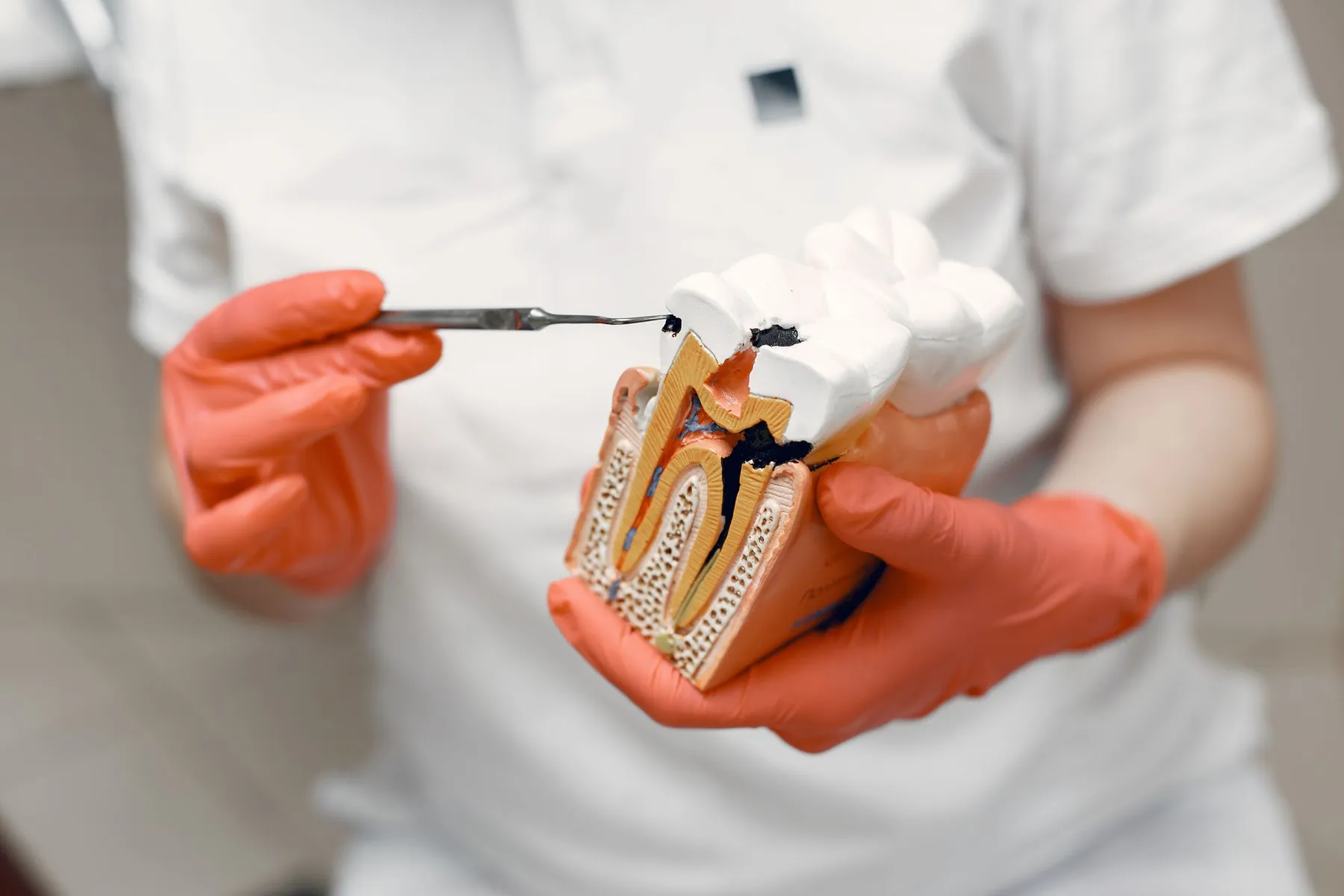
Root canal therapy (or endodontics) involves removing the infected pulp from the innermost part of the tooth. This prevents the infection from spreading and can help save a tooth that may otherwise have to be extracted.
Signs of infection:
- Pain when biting
- Tenderness or sensitivity
- Swelling or an abscess in the gum
- Fever
- Discolouration or increased mobility of the tooth
Why is root canal treatment necessary?
If the hard external structure of the tooth is breached, bacteria can easily reach the soft tissues inside – the pulp. You may not get any symptoms of infection within the tooth, but this can mean the infection can worsen and ultimately lead to tooth loss.
Root canal treatment removes the infected pulp from the tooth, leaving the external part of the tooth untouched and bacteria-free. The cavity is sealed with a filling and full function of the tooth is maintained. This treatment can prevent any further infection and is also less expensive than replacing a missing tooth.
What does root canal treatment involve?
Assessment
We take x-rays to assess the root canals and check for any other signs of infection, then use a local anaesthetic before treating the tooth.
Removing the infection
Once the infected pulp is removed, the root canals are shaped and cleaned to make sure the tooth is free from bacteria.
Sealing the tooth
The tooth is sealed with a filling or a crown. Treatment often requires two or more appointments, with the tooth protected and temporarily restored between each one.