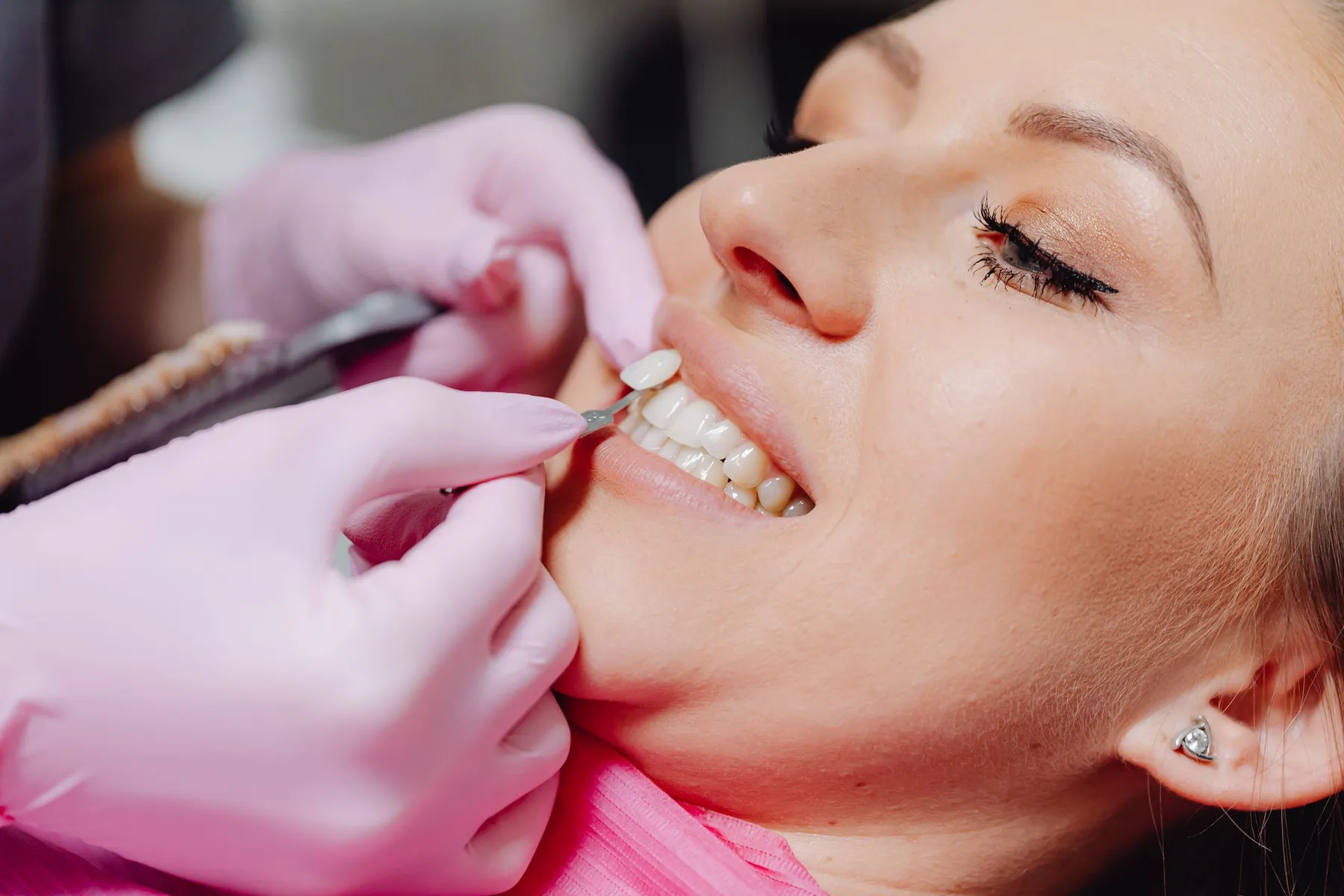
Veneers are usually fitted to the front upper and lower teeth and are made from ceramic, porcelain or composite material. They can be used to enhance your smile and help to protect an affected tooth from further damage.
Veneers offer a minimally invasive way to transform a tooth, as only a very thin layer of enamel is removed (if any) prior to fitting.
Benefits:
- More of the healthy tooth can be retained
- Natural-looking
- Durable
- Colour-matched to your natural teeth
- Can correct a number of flaws
- Stain-resistant
Treatment steps
Preparing the tooth
If necessary, a thin layer of enamel is removed from the surface of the tooth to accommodate the veneer.
Taking impressions
Once prepared, impressions are taken so a customised veneer can be produced in a laboratory, with your tooth colour noted so it blends in perfectly.
Fitting the veneer
When ready, the veneer is bonded to the tooth using a strong dental adhesive.
Aftercare
After fitting, it is important to keep your veneer well-maintained with regular brushing and interdental cleaning. Your dentist and hygienist will show you how to keep on top of your dental hygiene and keep a close eye on the health of your teeth and gums.
Although veneers are resilient, it is important to treat them with care, so try not to bite your fingernails, chew pen tops, or open anything with your teeth. It is also probably best to steer clear of very hard foods that could cause damage to the veneer.